Cat guide ·
Black Cat Day: How to Join In, Plus Black Cat Facts
By the Brus Crew, a family with a house full of cats

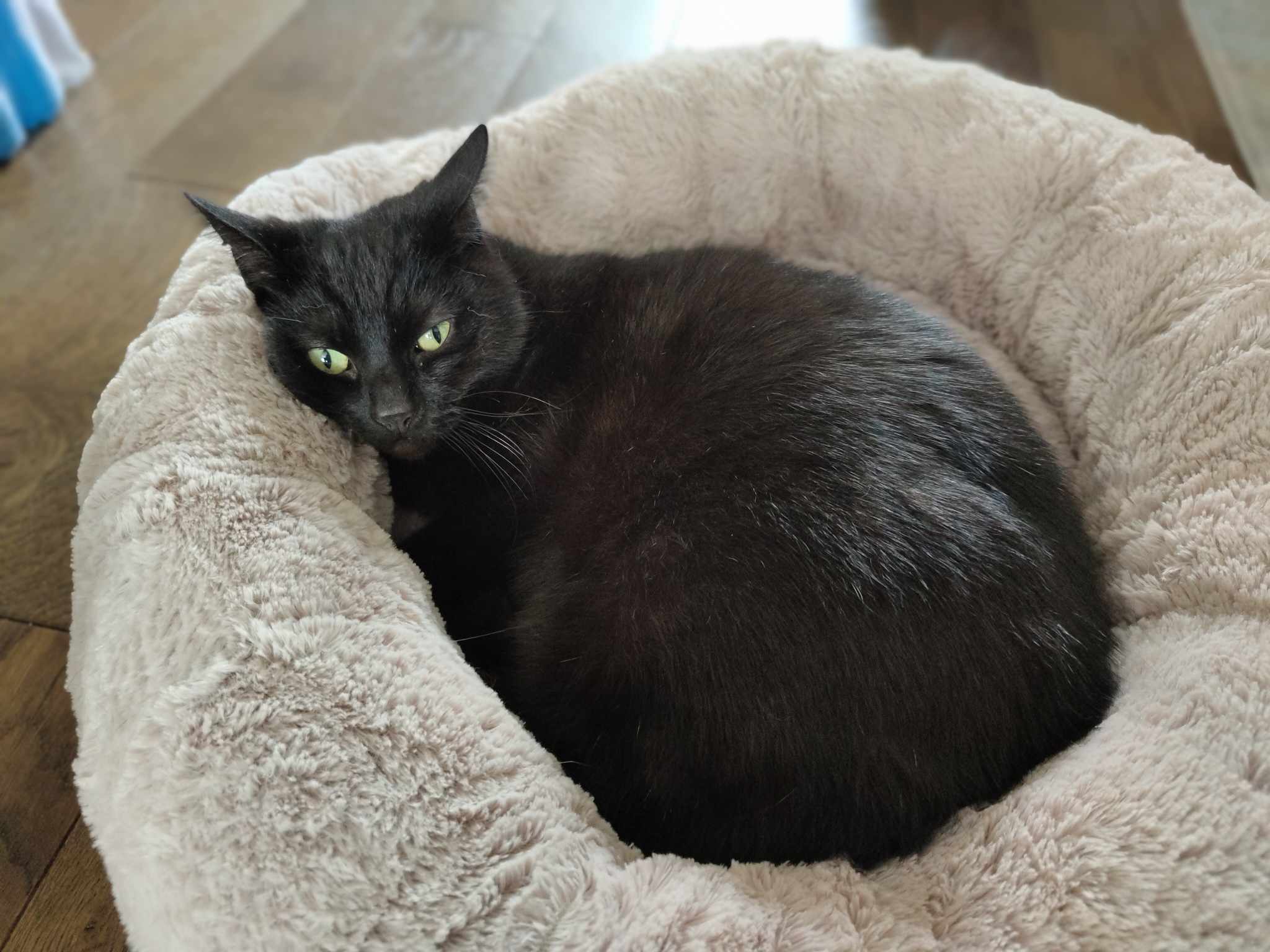
Black Cat Day is the UK's yearly celebration of black cats, held on 27 October. It was started by the charity Cats Protection to show off how brilliant black cats are and to encourage more people to adopt them, because rescues often say their black cats can take longer to find homes than cats with more eye-catching coats. Below you'll find what the day is about, easy ways to join in, and the black cat facts (and folklore) worth knowing. Our followers' cat Barry, a solid black boy whose tagline is "The strong silent type", has kindly agreed to be our poster cat. He hasn't actually said anything, but we're taking that as a yes.
What is Black Cat Day?
Black Cat Day, often called National Black Cat Day, falls on 27 October every year in the UK. Cats Protection, the UK cat welfare charity, began it as a way to celebrate black cats and give them a nudge up the adoption list.
You might also see Black Cat Appreciation Day on 17 August, which is better known in the US. If you fancy an excuse to celebrate your black cat twice a year, we won't tell anyone.
It lands just before Halloween, when black cats are all over the decorations, so it's a good moment to remember that real black cats are loving pets all year round, not spooky-season props.
Why do black cats take longer to find homes?
Rescue centres often say their black cats wait longer for a new home. There's no single explanation, but these are the reasons usually suggested:
- They're harder to photograph. Black fur can turn into a dark blob in a quick phone snap, and online adoption listings rely heavily on photos.
- They blend in. Black is a very common coat colour, so in a rescue full of cats, a ginger or a tabby can catch the eye first.
- Old superstitions. Most people don't take them seriously, but the "unlucky black cat" idea still lingers in some places.
None of this says anything about what a black cat is like to live with. There's no good evidence that coat colour decides personality, so a black cat is just as likely to be a lap cat, a chatterbox or a small agent of chaos as any other cat.
How to celebrate Black Cat Day
You don't need a black cat of your own to take part. Here are some easy ways to join in on 27 October, or any day of the year.
Adopt or foster a black cat
If you've been thinking about getting a cat, this is the best way to mark the day. Visit your local rescue and ask to meet the cats who've been waiting the longest. There's a fair chance some of them will be black. If you can't commit to a cat for life right now, ask whether the rescue needs fosterers. Fostering means giving a cat a temporary home while they wait for their forever family, and rescues that run fostering schemes will explain what's involved and what support they offer.
Share photos of your black cat
Social media fills up with black cats on Black Cat Day, and every gorgeous photo chips away at the idea that black cats are dull or unlucky. A few tips for getting a great shot of a black cat:
- Use soft natural light. A spot near a window on a bright day beats a dim room every time.
- Turn off the flash. It flattens black fur and can give cats glowing eyes.
- Choose a lighter background. A pale blanket or wall makes your cat's outline stand out.
- Tap on your cat's face. On most phone cameras, this focuses on your cat and adjusts the brightness for them rather than the room.
Our guide on how to make your cat Instagram famous has plenty more photo ideas.
Donate to a rescue
Rescues care for cats every day of the year, and food, vet bills and neutering all add up. A donation, however small, makes a difference, and you'll find ways to support rescue cats on our help a cat today page. If money's tight, many rescues welcome blankets, towels or unopened cat food, or volunteers to help with cleaning and socialising cats. It's always worth asking your local one what they need most.
Spread the word
Share a rescue's black cat adoption posts, tell a friend who's thinking about getting a cat, or gently correct the next person who says black cats are unlucky. In Britain, folklore often says the opposite, as you'll see below.
Meet Barry, our black cat ambassador
Barry is one of our followers' cats and a proper solid black boy. His profile lists him as a male British Shorthair, with Felix Doubly Delicious on the menu and a bird feather toy in the toy box. His tagline, "The strong silent type", tells you the rest. Barry doesn't need to say much to make an impression, which is very black cat behaviour.

Black cat facts worth knowing
Here are the black cat facts that are actually true, with the folklore clearly labelled as folklore.
1. Black cats can go rusty in the sun
A black coat isn't always jet black. In bright sunlight, many black cats show a reddish-brown or rusty tinge, and cats who spend a lot of time sunbathing can find their coat lightens a little over time. It's usually nothing to worry about. A sudden or patchy change in coat colour or condition can sometimes be linked to diet or health, though, so mention it to your vet if you notice one.
2. Many black cats have hidden tabby stripes
Look closely at a black cat in strong sunlight and you may spot faint stripes or spots, often called ghost markings. All cats carry a tabby pattern in their genes. In a solid black cat, another gene hides that pattern, but a shadow of it can still show through, especially in kittens.
3. Black turns up in lots of breeds
Black is a colour, not a breed. It's very common among moggies (mixed-breed cats) and is accepted in plenty of pedigree breeds too, including British Shorthairs, Maine Coons, Persians, Norwegian Forest Cats, Cornish and Devon Rexes and Oriental Shorthairs.
4. The Bombay is always black
One breed only ever comes in black: the Bombay. It was bred to look like a miniature panther, with a short, glossy black coat and usually gold or copper eyes. So every Bombay is a black cat, but most black cats you'll meet aren't Bombays.
5. Their eyes really stand out
Black cats often have gold, amber, copper or green eyes, and against a dark coat they practically glow. Fun extra fact: kittens of every colour are born with blue eyes, which change to their adult colour as they grow.
6. Lucky or unlucky depends on where you are
Black cat superstitions vary hugely around the world. Remember, this is folklore, not fact:
- Britain: in British folklore, black cats are often seen as lucky. A black cat crossing your path is traditionally a good sign in many parts of the UK, and you'll still find black cats on good luck cards.
- Japan: black cats are often thought of as lucky in Japanese folklore too.
- At sea: some old sailors' traditions held that a black ship's cat brought good fortune.
- Elsewhere: in other places, including parts of Europe and the US, black cats have a reputation for bad luck, an idea tied up with old beliefs linking them to witchcraft.
Whatever the tradition, a cat's coat colour has nothing to do with luck. The only real way a black cat changes your fortunes is by moving in and claiming the best spot on the sofa.
7. Plenty of "black" cats have a little white
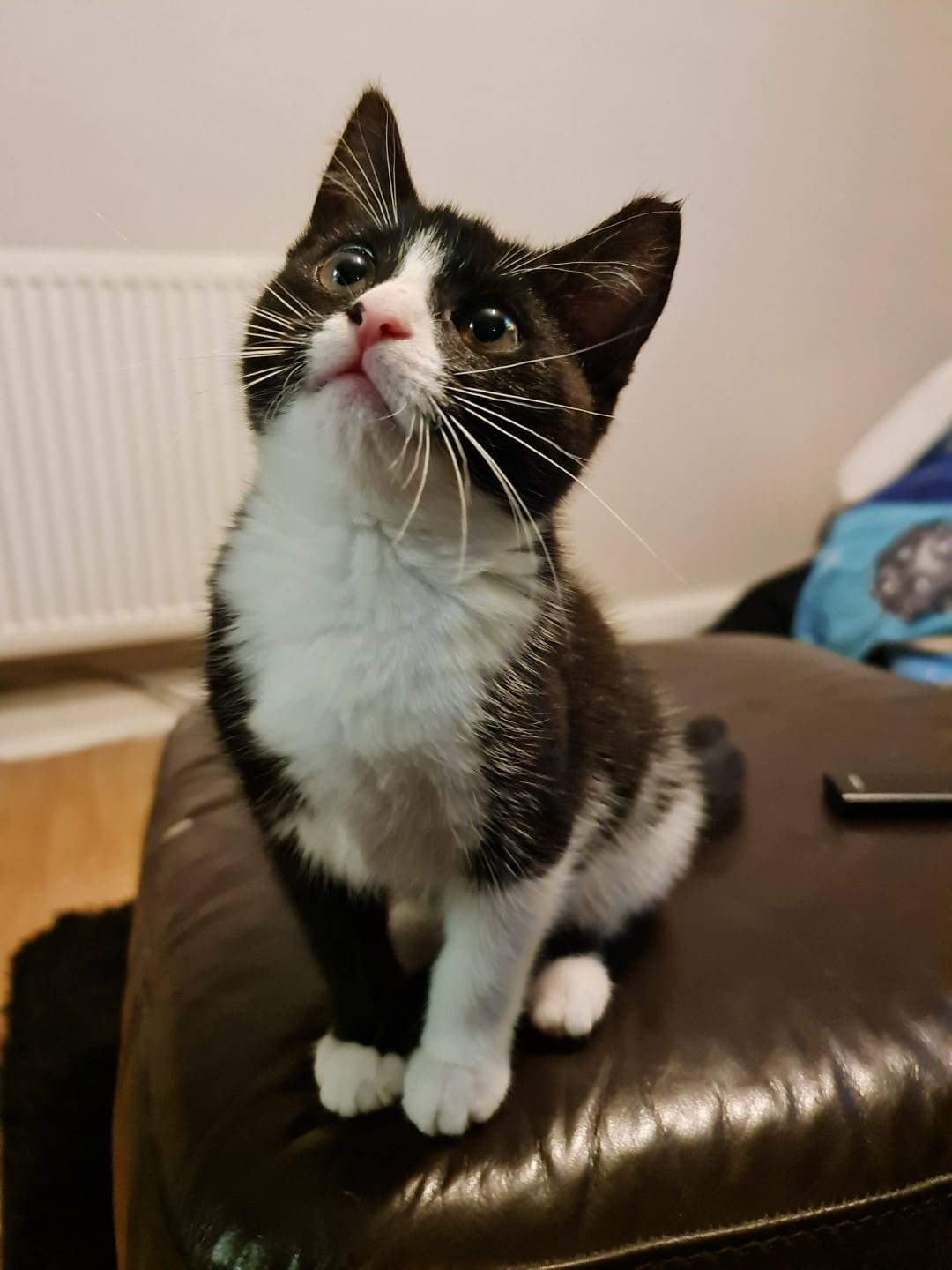
Lots of mostly black cats have a small white patch on the chest or a white toe or two. Add more white and you're into tuxedo territory, like our crew's own Zendaya, whose black-and-white coat suits her role as "the boss around here". Tuxedo is a pattern rather than a breed, and our tuxedo cat facts guide explains more.
Questions people ask
When is Black Cat Day?
In the UK, Black Cat Day is on 27 October every year. It was started by the charity Cats Protection. Black Cat Appreciation Day, on 17 August, is better known in the US.
Are black cats lucky or unlucky?
It depends whose folklore you follow. In British and Japanese tradition they're often considered lucky, while elsewhere they've been seen as unlucky. In reality, coat colour has no effect on luck either way.
Why is my black cat turning brown?
Sunlight can bleach black fur to a rusty brown, especially in cats who love a sunny windowsill. If the change is sudden or patchy, or comes with other signs such as weight loss or a dull coat, ask your vet to take a look.
Are black cats harder to rehome?
Rescues often say black cats take longer to find homes, which is exactly why Black Cat Day exists. Adopting, fostering or simply sharing their adoption posts all help.
Is a Bombay cat the same as a black cat?
Every Bombay is black, but most black cats aren't Bombays. The Bombay is a specific pedigree breed, while most black cats are moggies.
Got a black cat who deserves a moment in the spotlight? Send us your cat and they could join Barry in our followers' gallery.