


Bengal
A tiny leopard with a big, busy brain


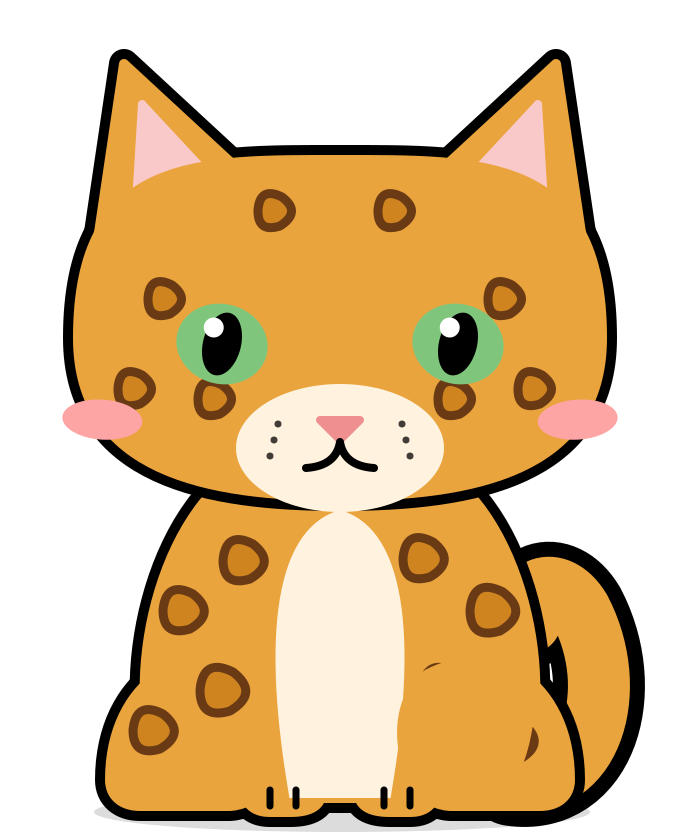
The Bengal was created by crossing domestic cats with the small, wild Asian leopard cat, and the first breeders in the United States worked on it from the 1960s onwards. Pet Bengals today are several generations away from their wild ancestor, and the aim was always a domestic cat with a wild look.
That look is hard to beat: a golden coat covered in dark spots or marbled swirls, sometimes with a glittery sheen.


Bengal at a glance
- Origin
- USA
- Size
- Medium to large
- Weight
- Usually 3.5 to 7 kg
- Lifespan
- Usually 12 to 16 years
- Coat
- Short, dense and silky, often with a glittery shine
- Colours
- Brown, snow and silver, with spots, rosettes or marbling
Personality scorecard
- Energy
- 5 out of 5
- Affection
- 4 out of 5
- Chattiness
- 4 out of 5
- Grooming needed
- 1 out of 5
- Good with children
- 4 out of 5
- Good with other pets
- 3 out of 5
Our own rough guide. Every cat is different.
What they look like
Bengals are medium to large, muscular cats with long, strong bodies and high rumps. The short coat feels unusually soft and silky, and the spots may be solid or rosettes (spots with a darker outline and a lighter centre). The marbled pattern is a swirl of horizontal streaks. The head is small compared to the body, with high cheekbones, big eyes and a broad nose.
Personality
Clever, curious and always on the go. Bengals tend to be happier with a job to do: climbing, fetching, learning tricks and solving puzzle feeders. Many love water and will happily sit in a sink. They are also known to be chatty and attached to their people. A bored Bengal will make its own entertainment, usually by redesigning your shelves, so they suit active homes better than quiet ones.
Care and grooming
Give a Bengal a lot of play every day, tall cat trees, shelves to climb and puzzle toys, and rotate them to keep things fresh. Many do well on a harness for supervised outdoor time. The coat needs almost no grooming. Feed a good quality, high-protein complete diet in measured portions.
Health to know about
Hypertrophic cardiomyopathy (HCM) is seen in Bengals, and so are two inherited conditions that have DNA tests: progressive retinal atrophy (PRA-b) and pyruvate kinase deficiency (PK-def). Ask breeders for the results for both parents. Regular vet checks, vaccinations and dental care matter as with any cat.
Could suit
- Active families and people who enjoy playing with their cat
- Homes with space to climb
- Owners who like training and games
Think twice if
- If you are out all day and have no other pets
- If you want a quiet, sleepy lap cat
- If your home is full of fragile ornaments
“I once jumped from the top of the wardrobe to the curtains to the other wardrobe. I got a score of nine.”, Rocket
Compare the Bengal
Name ideas for a Bengal
- Leo
- Simba
- Tigger
- Jaguar
- Mowgli
- Zuri
- Nala
- Saffron
- Pip
- Ember
Want more? Try the cat name generator, or find out their age in human years with the cat age calculator.


Questions people ask
Are Bengal cats wild?
No. Pet Bengals are domestic cats several generations from their wild ancestor, though they are very energetic and clever and need lots of play.
Do Bengals need a lot of exercise?
Yes. Plan on plenty of daily play, climbing space and puzzle toys, or they may get bored and destructive.
Do Bengals like water?
Many do, and will paddle in a sink or watch you in the bath, though not every cat enjoys it.
Are Bengals good with children and other pets?
They can be, especially if introduced young and kept busy. They are strong and playful, so supervise young children.
Other breeds to meet
This is a friendly overview, not veterinary advice. Ask your vet about your own cat.
