


British Shorthair
The round-faced teddy bear of the cat world


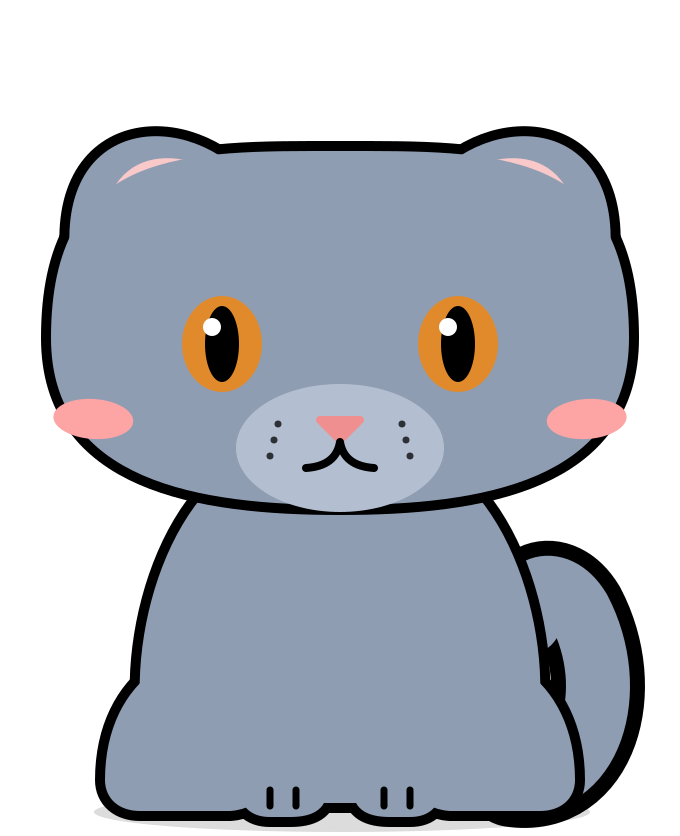
The British Shorthair is the cat you picture when someone says “British cat”: round face, round eyes, chunky cheeks and a thick, plush coat that feels like a teddy bear. The breed grew out of ordinary British street and farm cats, and it was among the cats shown at the very first cat shows in the 1870s.
Most of the Brus Crew are British Shorthairs, so we have a lot of affection (and a lot of fur on the sofa) to report.


British Shorthair at a glance
- Origin
- Britain
- Size
- Medium to large
- Weight
- Females 3.5 to 5.5 kg, males 5 to 8 kg
- Lifespan
- Usually 12 to 17 years
- Coat
- Short, dense and plush
- Colours
- Blue-grey is the famous one, but they come in many colours and patterns
Personality scorecard
- Energy
- 2 out of 5
- Affection
- 3 out of 5
- Chattiness
- 2 out of 5
- Grooming needed
- 2 out of 5
- Good with children
- 4 out of 5
- Good with other pets
- 4 out of 5
Our own rough guide. Every cat is different.
What they look like
A British Shorthair is stocky, with a broad chest, short sturdy legs, a big round head and small, rounded ears set wide apart. The coat is short but so dense that it stands away from the body. The classic British Blue has copper or orange eyes, but the breed comes in lots of colours, including tabby, tortoiseshell, cream, white and bicolour. They take their time to grow up and are often not fully filled out until three to five years old.
Personality
Calm, easy-going and not demanding. British Shorthairs usually like being near you more than being on you: they are happy to sit beside you, follow you from room to room and supervise whatever you are doing. Plenty are not keen on being picked up and carried, so let them choose. They are usually relaxed with children and with other pets, and they cope well with being left for a working day.
Care and grooming
These cats love their food, so portion control matters more than anything else. Keep them lean with measured meals and play sessions with a wand toy, because a bored British Shorthair can quietly turn into a very round one. Brush them once or twice a week, and a little more when they moult in spring and autumn. Teeth and gums need a regular check like any cat.
Health to know about
Overweight is the big one, and extra weight puts strain on joints and the heart. Hypertrophic cardiomyopathy (HCM), a thickening of the heart muscle, is seen in the breed, so ask any breeder about heart screening in the parents. Your vet will check their heart, teeth and weight at every visit.
Could suit
- Calm homes and flats where someone is out for part of the day
- Families with respectful children
- People who like a companion more than a lap cat
Think twice if
- If you want a cat who loves being carried
- If you cannot keep an eye on portion sizes
- If you want a very chatty cat
“I am big, I am round and I am extremely good at sitting on things. This is called being a British Shorthair.”
British Shorthairs in the crew
Meet the Brus Crew and followers’ cats who are British Shorthairs:
Compare the British Shorthair
Name ideas for a British Shorthair
- Biscuit
- Winston
- Teddy
- Bear
- Duchess
- Crumpet
- Marmite
- Earl Grey
- Pudding
- Sterling
Want more? Try the cat name generator, or find out their age in human years with the cat age calculator.


Questions people ask
Are British Shorthairs good for first-time owners?
Often, yes. They are usually calm, adaptable and not too demanding. The main jobs are keeping their weight healthy and giving them regular play.
Do British Shorthairs like to be picked up?
Many do not. They tend to prefer sitting next to you to being carried, so let your cat decide and never force a cuddle.
How big do British Shorthairs get?
Females are usually 3.5 to 5.5 kg and males 5 to 8 kg. They fill out slowly and can keep growing until they are three to five years old.
Do British Shorthairs shed a lot?
They have a short, dense coat that sheds more in spring and autumn. A weekly brush is usually enough the rest of the year.
Other breeds to meet
This is a friendly overview, not veterinary advice. Ask your vet about your own cat.
