


Maine Coon
The gentle giant with the fluffiest tail


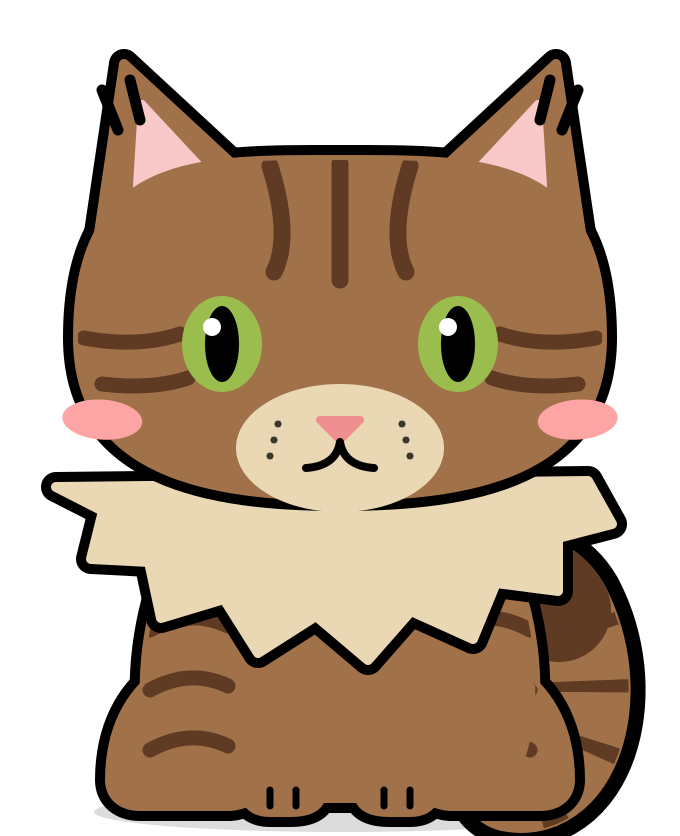
The Maine Coon is one of the largest breeds of domestic cat, and one of the friendliest. It comes from the north-east of the United States, where it is the official state cat of Maine, and it was built to cope with cold winters: a thick, water-resistant coat, big furry paws and a tail like a feather boa.
The stories that say Maine Coons are part raccoon or came over with Marie Antoinette are just legends. The truth is that no one knows exactly how the breed began, though it certainly grew from hardy farm and ship cats.


Maine Coon at a glance
- Origin
- Maine, USA
- Size
- Large
- Weight
- Females 4 to 6 kg, males 6 to 9 kg or more
- Lifespan
- Usually 12 to 15 years
- Coat
- Long, shaggy and silky, with a ruff, tufted ears and a very bushy tail
- Colours
- Brown tabby is the classic, but almost any colour and pattern
Personality scorecard
- Energy
- 3 out of 5
- Affection
- 4 out of 5
- Chattiness
- 3 out of 5
- Grooming needed
- 4 out of 5
- Good with children
- 5 out of 5
- Good with other pets
- 4 out of 5
Our own rough guide. Every cat is different.
What they look like
Everything about a Maine Coon is big: a long, rectangular body, a broad chest, large paws with tufts of fur between the toes, and a long bushy tail. The head has a square muzzle, high cheekbones and large, tall ears often finished with lynx-like tufts. The coat is shorter on the shoulders and longer on the belly, with a fluffy ruff around the neck. They take a long time to grow up and may not be fully grown until they are three to five years old.
Personality
Gentle, sociable and good-humoured. Maine Coons tend to follow their people around, “help” with whatever you are doing and greet visitors rather than hide. Many are playful well into adulthood, and plenty enjoy water, so do not be surprised by a paw in the washing-up bowl. They are known for chirps and trills rather than loud meows. They are usually patient with children and with other pets.
Care and grooming
Feed a good complete diet suited to a large cat, and keep an eye on their weight as they mature. The long coat needs brushing a few times a week, with extra care around the armpits, belly and “trousers” where it tangles, and more often when they moult. Give them space: a big cat likes a big, strong scratching post and a sturdy cat tree rather than a wobbly one.
Health to know about
Maine Coons can be prone to hypertrophic cardiomyopathy (HCM), a heart condition. A DNA test exists for one known HCM mutation, but it does not catch every case, so ask breeders about heart scans too. Hip dysplasia and spinal muscular atrophy (SMA, which also has a DNA test) are also seen in the breed. A good breeder will share health results; a good vet will watch their weight and joints.
Could suit
- Families who want a friendly, sociable cat
- Homes with room for a large cat
- People happy to brush a long coat
Think twice if
- Tiny homes with no space for a big cat tree
- If you do not enjoy grooming
- If you want a cat who is happy alone for long hours
“Looks big. Is soft. Has a tail you can use as a pillow. Maine Coons are basically a cloud with opinions.”, Zendaya
Compare the Maine Coon
Name ideas for a Maine Coon
- Moose
- Gandalf
- Maple
- Chewie
- Bigsby
- Juniper
- Fergus
- Hagrid
- Walnut
- Tank
Want more? Try the cat name generator, or find out their age in human years with the cat age calculator.


Questions people ask
How big do Maine Coons get?
Males are usually 6 to 9 kg and sometimes more, and females 4 to 6 kg. They are one of the longest domestic cats, and they often take three to five years to finish growing.
Are Maine Coons good family cats?
They often are. They tend to be friendly, patient and sociable, though like any cat they need children to be gentle and respectful.
Do Maine Coons need a lot of grooming?
They do. Plan on brushing a few times a week, and more in moulting season, to stop tangles forming in the longer fur.
Do Maine Coons meow a lot?
They are known for soft chirps, trills and chatters rather than loud meows, though every cat is different.
Other breeds to meet
This is a friendly overview, not veterinary advice. Ask your vet about your own cat.
