


Russian Blue
The silvery-blue cat with emerald eyes


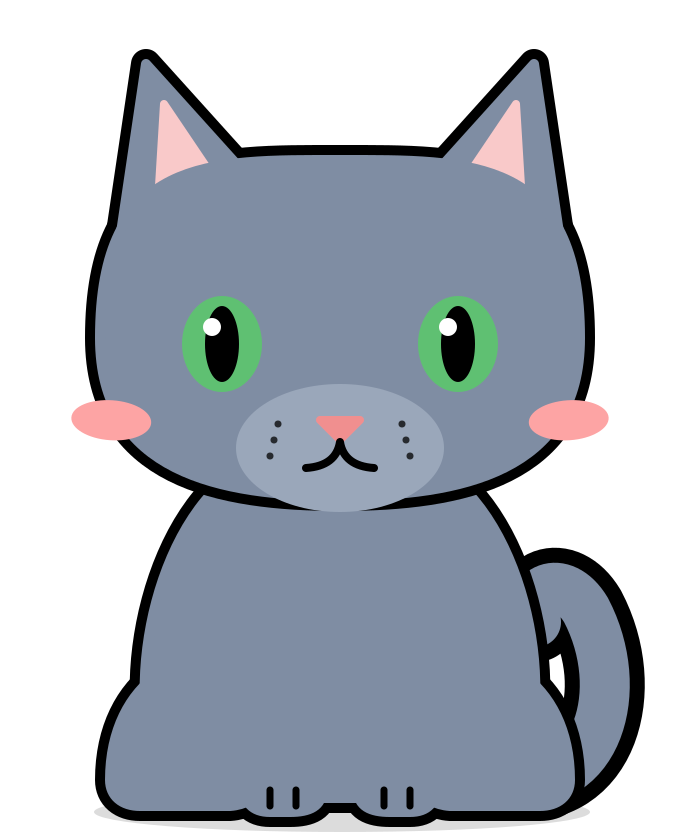
The Russian Blue is said to have come from the port of Arkhangelsk in northern Russia, and to have travelled to Britain and northern Europe with sailors in the 1800s. Its looks are unmistakable: a short, silvery-blue coat and bright green eyes.
Breeders in Britain, Scandinavia and the United States all shaped the modern cat, and it has stayed a quiet favourite ever since.


Russian Blue at a glance
- Origin
- Northern Russia (Arkhangelsk), perfected in Britain and elsewhere
- Size
- Medium, elegant
- Weight
- Usually 3 to 5.5 kg
- Lifespan
- Often 15 to 20 years
- Coat
- Short, dense and plush, with a silvery sheen
- Colours
- Blue-grey only, with silver-tipped hairs
Personality scorecard
- Energy
- 3 out of 5
- Affection
- 4 out of 5
- Chattiness
- 2 out of 5
- Grooming needed
- 2 out of 5
- Good with children
- 3 out of 5
- Good with other pets
- 3 out of 5
Our own rough guide. Every cat is different.
What they look like
A Russian Blue is a slim, graceful cat with long legs, a wedge-shaped head, big upright ears and a flat forehead. The double coat is so dense that it stands away from the body, and each hair is silver-tipped, giving a shimmering look. The eyes turn from yellow in kittens to a vivid green in adults. They have a gentle, slightly smiling expression because of the way the mouth curves.
Personality
Gentle, loyal and reserved. Russian Blues often take a while to warm up to strangers but become devoted to their families. They like routine, prefer calm homes and tend to be quiet. They are playful and clever, and many will fetch a toy or learn their name. They bond strongly with one or two favourite people.
Care and grooming
Little grooming is needed: a weekly brush keeps the coat in shape. Feed measured meals, as the breed can gain weight easily. Give them predictable routines, hiding places and plenty of play to keep their minds busy, and avoid sudden changes if you can.
Health to know about
The breed is generally robust and long-lived. Keep an eye on weight and teeth, as with any cat. Despite a common rumour, Russian Blues are not hypoallergenic: allergens are found in saliva and skin as well as fur.
Could suit
- Quiet homes with a regular routine
- Singles and couples who want a loyal companion
- People who like a calm, clever cat
Think twice if
- If you have lots of visitors and want a sociable cat
- If you move house or change routine a lot
- If you have allergies: they are not hypoallergenic
“I will observe you from a distance first. If you pass, I will sit beside you. Not on you. Beside.”, Luther
Compare the Russian Blue
Name ideas for a Russian Blue
- Misty
- Smokey
- Storm
- Cobalt
- Ash
- Mercury
- Bluebell
- Sasha
- Boris
- Pewter
Want more? Try the cat name generator, or find out their age in human years with the cat age calculator.


Questions people ask
Are Russian Blue cats hypoallergenic?
No. This is a common rumour, but allergens are found in saliva and skin as well as fur, so allergic people can still react.
How long do Russian Blue cats live?
Often 15 to 20 years, which is one of the longer lifespans among pedigree cats.
Are Russian Blues shy?
Many are reserved with strangers and take time to warm up, but they are usually very loyal and affectionate with their own family.
What colour are Russian Blue kittens’ eyes?
Kittens’ eyes start yellow and turn green as they mature.
Other breeds to meet
This is a friendly overview, not veterinary advice. Ask your vet about your own cat.
