Cat guide ·
What Age Can Cats Go Outside? A Guide to First Trips Out
By the Brus Crew, a family with a house full of cats


Most kittens can go outside at around 5–6 months old, once they're fully vaccinated, neutered and microchipped. In practice that means waiting until at least a week or so after their second vaccination (usually given at about 12 weeks) and until they've been neutered, which Cats Protection recommends at around 4 months. A new adult cat, whatever their age, should stay indoors for about 2–4 weeks first, so they learn that your home is their home. When the big day comes, keep that first trip short, supervised and just before a meal, so they've got a very good reason to come back.
Key points
- Kittens shouldn't go outside until they're fully vaccinated, neutered and microchipped, which for most is around 5–6 months.
- Vaccine protection usually builds over a week or so after the second dose, and your vet will confirm when it's safe.
- In England, pet cats must be microchipped by the time they're 20 weeks old.
- New adult cats should stay in for about 2–4 weeks before their first trip out.
- Bringing cats in at night lowers the risk from traffic, especially around Bonfire Night.
What age can kittens go outside?
There isn't a magic birthday. It's more of a checklist, and once every box is ticked, your kitten is ready. Here's how it usually works in the UK, although your vet will set the exact timings for your kitten.
| Step | Usual timing | Why it matters |
|---|---|---|
| First vaccination | About 8–9 weeks | Starts protection against cat flu and feline infectious enteritis. |
| Second vaccination | About 12 weeks | Completes the first course. Protection builds over the following week or so. |
| Neutering | Often from about 4 months | Kittens can get pregnant from around 4 months, and neutered cats tend to roam and fight less. |
| Microchip | By 20 weeks (the law in England) | The best chance of getting your cat home if they go missing. |
| First trip outside | Often about 5–6 months | Once all of the above are done and your vet is happy. |
Fully vaccinated
Vaccinations protect against cat flu and feline infectious enteritis (also called panleukopenia), which spread between cats and can be very serious, especially for kittens. The first course is usually two doses: one at about 8–9 weeks and another at about 12 weeks. Protection takes a little while to build after the second dose, often around a week or so, but vaccines differ, so check with your vet before your kitten sets a paw outside. If your cat is going to roam, your vet may also suggest vaccinating against feline leukaemia virus (FeLV), which spreads through close contact between cats. Boosters follow after that to keep the protection going.
Neutered
Cats Protection recommends neutering at around 4 months, and many UK vets are happy to do it from then. That timing matters, because kittens can get pregnant from about 4 months old, and an unneutered female who slips outside can come home expecting before you've even noticed she's in season. Unneutered males tend to roam further, fight more and spray more, which means more bite wounds and more time crossing roads. Fight bites can also spread feline immunodeficiency virus (FIV) between cats. If the cost is a worry, our help a cat today page explains how to check your cat's chip and where to find low-cost neutering schemes.
Microchipped
Since June 2024, pet cats in England must be microchipped by the time they're 20 weeks old, and your contact details on the chip database must be kept up to date. Even if you live somewhere it isn't the law, a chip is the best way to make sure a lost cat gets home, because a vet or rescue can scan any cat that's handed in. Collars come off, chips stay put. Many vets will microchip your kitten while they're under anaesthetic for neutering, which saves an extra trip.
Put all that together and most kittens are ready for their first adventure at around 5–6 months. If yours is still small or very timid, there's no harm in waiting a little longer. Our guide to kitten growth stages explains what's happening at each step along the way.
When can a new cat go outside?
If you've adopted an adult cat, or you've just moved house with your cat, keep them indoors for about 2–4 weeks before letting them out. That gives them time to learn the sounds and smells of their new home, bond with you, and work out that this is where the food, the comfy beds and the fuss happen. A cat who's let out too soon may try to head back to their old home, or simply get lost.
Signs they're ready include eating well, using the litter tray, exploring the house confidently and coming to you for attention rather than hiding. Nervous cats may need longer, and that's absolutely fine. Rescue cats don't always come with a birthday, so if you're unsure how old yours is, our guide on how to tell how old a cat is can help, and the cat age calculator will tell you what that means in human years.
How to let your cat out for the first time
A little planning makes that first trip much less stressful, for both of you.
- Pick a quiet, dry day. Avoid bin day, building work next door and windy weather. A calm weekend morning when you're at home all day is ideal.
- Go out before a meal. A slightly hungry cat is far more likely to come back when called. Practise beforehand by shaking the treat box or tapping their bowl at feeding time, so they learn that sound means food.
- Go with them. Stay outside for the first few trips and let them explore at their own pace. Let them walk out by themselves rather than carrying them to the end of the garden.
- Leave the door open. If something startles them, they'll want a quick escape route back to safety.
- Keep it short. A few minutes is plenty the first time. Build up gradually over the following days.
- Don't chase them. If they hop over the fence, stay calm and use your food call. Chasing a nervous cat usually sends them further away.
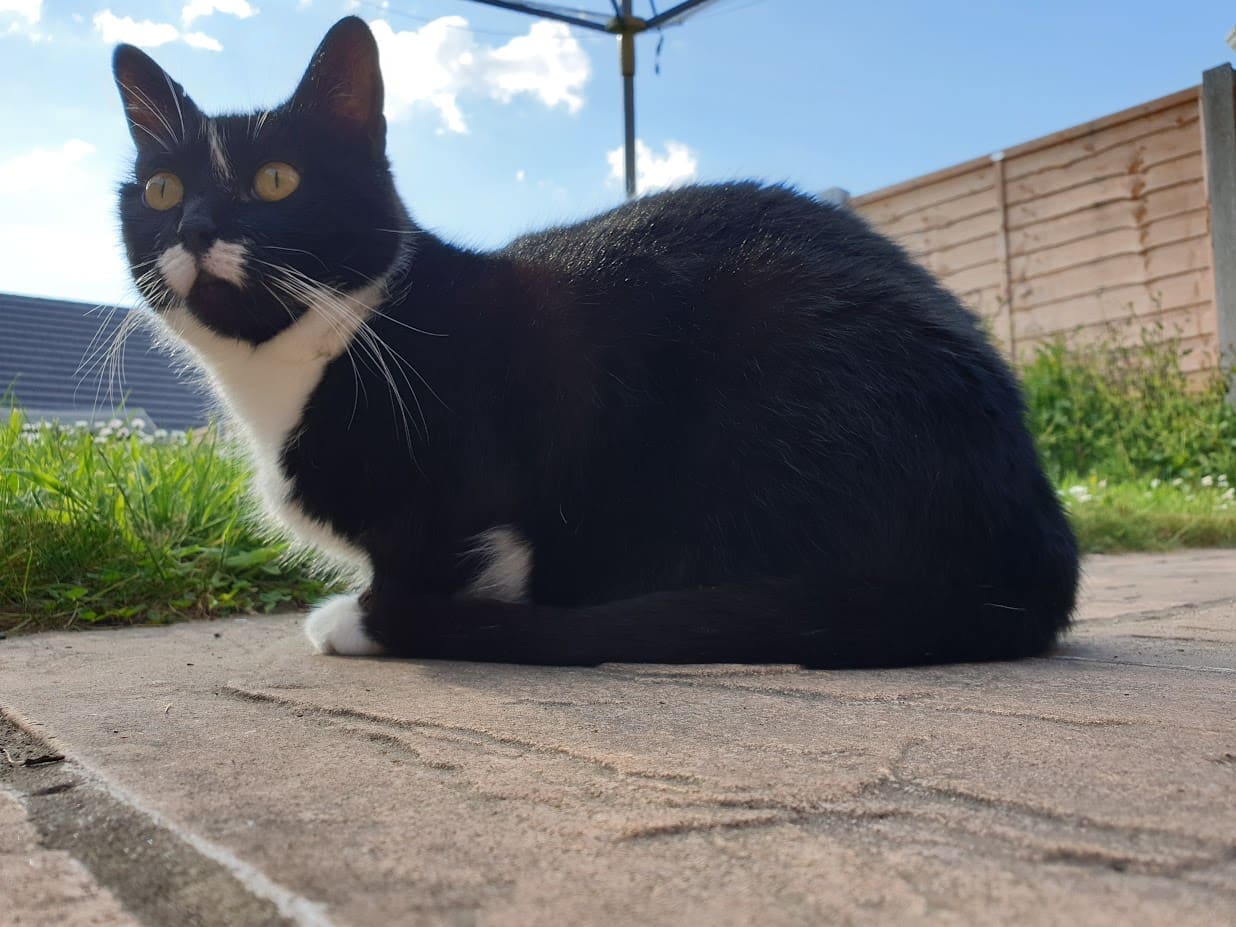
Expect a bit of fence inspection once they find their feet. Our very own Zendaya is the boss of the house and likes to keep everything in check, and she's been snapped balancing on top of a fence post, looking very much in charge.

Cat flaps, collars and ID
Once your cat is coming and going happily, a cat flap gives them a bit of independence. To teach them, prop it open at first and reward them with a treat each time they go through, then lower it gradually so they learn to push it. A microchip cat flap that only opens for your cat is worth the money, because it keeps the neighbourhood cats out of your kitchen.
If you'd like your cat to wear a collar, only ever use a quick-release (snap-open) collar, which pops open if it gets caught on a branch or fence. Elastic and buckle collars can trap a leg or jaw and cause nasty injuries. Fit it so you can slide two fingers underneath, and choose a reflective one so drivers can spot your cat in headlights. An ID tag with your phone number is handy, but it's never a replacement for a microchip.
Should cats be kept in at night?
Bringing your cat in from dusk until morning is one of the simplest ways to keep them safe. Drivers struggle to see cats in the dark, and headlights can dazzle them, so night-time roads are much riskier than daytime ones. Once the clocks go back at the end of October, evening rush hour happens in the dark too. An easy routine is to call your cat in for their evening meal just before dusk, then lock the cat flap until morning.
Fireworks season and Bonfire Night
Bonfire Night is on 5 November, but fireworks often start in late October and pop up again at Diwali and New Year. Loud bangs can send a frightened cat running far from home, so during fireworks season:
- bring your cat in well before dark and lock the cat flap
- close windows and curtains, and put the TV or radio on to mask the noise
- give them hiding places, such as a covered bed, a box or a space under the bed, and let them hide if they want to
- put a litter tray down for the night
- check their microchip details are up to date, just in case
If your kitten is almost ready for their first trip out, it's worth waiting until fireworks season has calmed down.
Indoor or outdoor cat?
This one divides opinion, and there's no single right answer. Most pet cats in the UK are allowed outside, and outdoor access gives them exercise, plenty to explore and the chance to behave like cats: climbing, hunting, patrolling and sunbathing. The trade-off is risk, including traffic, fights, infections, getting lost and poisons such as antifreeze and lilies.
Indoor life can be the safer choice for some cats, for example those living next to a very busy road or with certain health conditions, and some people opt for a middle ground with a cat-proof garden or an enclosed "catio". Indoor cats can be perfectly happy, but they rely on you for everything outdoor cats find for themselves. That means daily play, things to climb, scratching posts, window perches, puzzle feeders and toys that get swapped around so they stay interesting. Our guide to safe cat toys is a good place to start. Whichever you choose, the goal is the same: a cat who's safe, busy and content.
Questions people ask
Can kittens go outside after their first vaccination?
No. One dose isn't enough to protect them. Wait until they've finished the full course, protection has had time to build and your vet has confirmed it's safe, and ideally until they've been neutered and microchipped too.
How long should I keep a new cat indoors?
Usually about 2–4 weeks. That's long enough for most cats to settle in and recognise their new home as base. Nervous cats may need longer, so go by how confident and relaxed they seem rather than the calendar.
Will my cat come back the first time I let them out?
Most do, especially if they've had time to settle in and they're a little hungry when they go out. Short, supervised trips, a familiar food call and an open door all help. If your cat doesn't come home, check sheds and garages nearby, and tell your microchip database and local vets.
Should I put butter on my cat's paws before letting them out?
No, it's an old wives' tale. It won't help your cat find their way home, and the extra fat can upset their tummy. Keeping a new cat in for a few weeks so they can settle is what really works.
Is it cruel to keep a cat indoors?
Not if their needs are met. Indoor cats need plenty of play, places to climb, scratch and hide, and lots of your company. Some cats are safer indoors, but they rely on you to keep life interesting.
Got a garden explorer of your own? Tell us about your cat and they could be featured on the site.