


Burmese
The silky, people-loving “brick wrapped in silk”


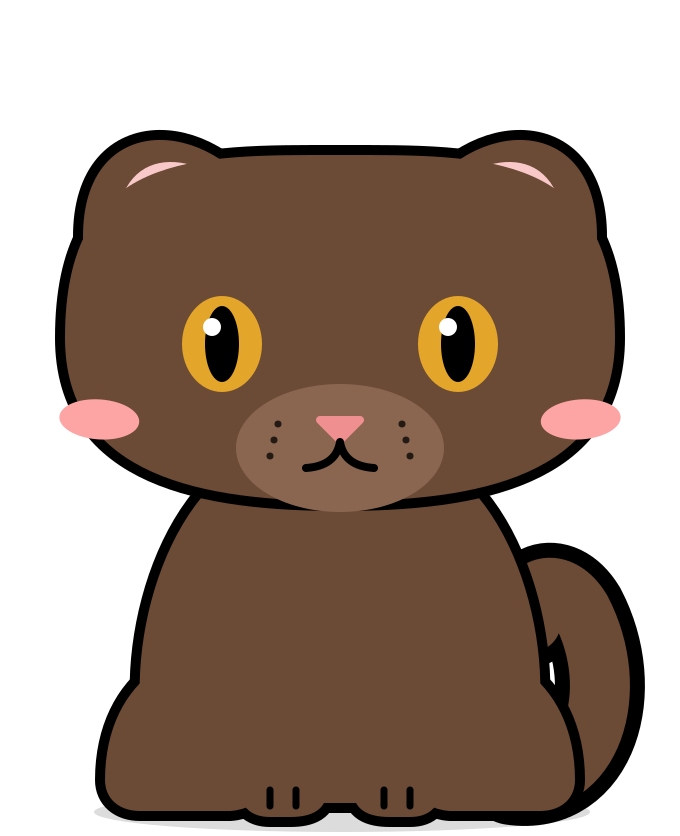
Every modern Burmese traces back to a small, dark brown cat called Wong Mau, who was taken from Burma to San Francisco in the 1930s and bred with Siamese cats. From there the breed spread, and it developed in slightly different ways in America and Britain.
The Burmese has been described as a “brick wrapped in silk”: surprisingly heavy and muscular for its size, with a coat like satin.


Burmese at a glance
- Origin
- Burma (Myanmar), developed in the USA and Britain
- Size
- Medium
- Weight
- Usually 3.5 to 5.5 kg
- Lifespan
- Often 12 to 16 years
- Coat
- Short, fine, glossy and close-lying
- Colours
- Sable (a rich dark brown) is the classic, plus blue, chocolate, lilac, red, cream and tortie
Personality scorecard
- Energy
- 4 out of 5
- Affection
- 5 out of 5
- Chattiness
- 3 out of 5
- Grooming needed
- 1 out of 5
- Good with children
- 5 out of 5
- Good with other pets
- 4 out of 5
Our own rough guide. Every cat is different.
What they look like
A compact, muscular cat with a rounded head, wide-set, rounded eyes in gold or yellow, and a satin-smooth short coat. The classic sable is a deep, warm brown that is a little paler underneath. British-type Burmese have a moderate, rounded head, while some American lines have a much shorter, flatter face, which is something to ask about when you look at a breeder.
Personality
Sociable, affectionate and clingy. Burmese are famous for wanting to be with their people, following them around, sitting on laps and sleeping in the bed. They are playful well into adulthood, good with children and other pets, and chatty without being as loud as a Siamese. They are not happy being left alone all day.
Care and grooming
Very little grooming: a weekly rub with a soft brush or cloth. They need company, play and climbing space more than anything. Burmese love their food, so measure meals, because weight raises the risk of diabetes.
Health to know about
Burmese cats are more prone to diabetes mellitus than many breeds, so keep weight healthy and ask your vet about signs such as drinking more. Gum disease, a muscle weakness caused by low potassium (hypokalaemic polymyopathy) and, in some American lines, a serious inherited head and face defect (the contemporary Burmese craniofacial defect) have been reported. Ask breeders about health testing and choose a cat with a moderate, not extremely flat, face.
Could suit
- Families and homes where someone is around most of the day
- People who want a loyal, affectionate lap cat
- Homes with other pets
Think twice if
- If you are out all day with no other pets
- If you want an independent cat
- If you cannot control portion sizes
“Velvet coat, loud heart, no personal space. You are my lap now.”
Compare the Burmese
Name ideas for a Burmese
- Mocha
- Cocoa
- Truffle
- Sable
- Rangoon
- Mandalay
- Chestnut
- Velvet
- Brownie
- Pagoda
Want more? Try the cat name generator, or find out their age in human years with the cat age calculator.


Questions people ask
Are Burmese cats clingy?
Yes, they are known for wanting to be close to their people, so they suit homes where someone is around much of the day.
Do Burmese cats get diabetes?
They are more prone to diabetes than many breeds, so keep their weight healthy and tell your vet if you notice them drinking or urinating more.
Are Burmese cats noisy?
They are chatty, but usually softer-voiced than a Siamese.
How long do Burmese cats live?
Often 12 to 16 years, and sometimes longer.
Other breeds to meet

This is a friendly overview, not veterinary advice. Ask your vet about your own cat.
