


Savannah
The tall, spotted, wildly energetic show-off


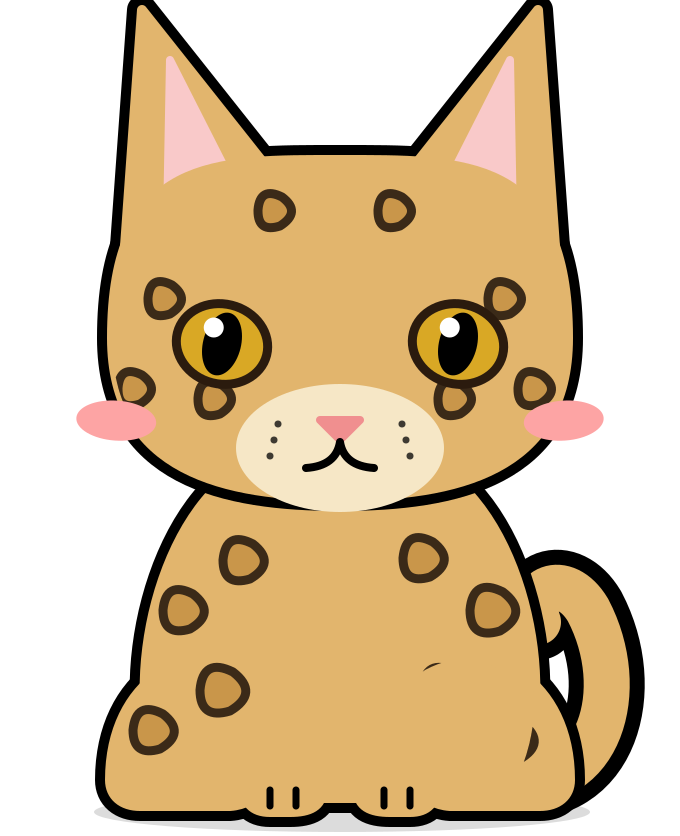
The Savannah is a hybrid between a domestic cat and the serval, a tall, long-legged African wild cat. Breeders in the United States began crossing them in the 1980s. Early generations are labelled F1, F2 and so on, with F1 having a serval parent, and each generation further from the serval is generally smaller and more domestic.
It is a spectacular animal, and one that needs much more than most owners can offer, so we think you should read this page before you fall for the spots.


Savannah at a glance
- Origin
- USA
- Size
- Large and tall
- Weight
- Usually 4 to 9 kg, more in early generations
- Lifespan
- Often 12 to 17 years
- Coat
- Short, with bold spots on a tawny, golden or silver coat
- Colours
- Brown spotted, silver spotted, black and smoke
Personality scorecard
- Energy
- 5 out of 5
- Affection
- 3 out of 5
- Chattiness
- 3 out of 5
- Grooming needed
- 1 out of 5
- Good with children
- 3 out of 5
- Good with other pets
- 3 out of 5
Our own rough guide. Every cat is different.
What they look like
Savannahs are tall and slim, with very long legs, a long neck, large upright ears with a pale “ocelli” spot on the back, and dark spots on a golden, silver or smoky coat. Early generations can be very large. Many are said to be able to leap great heights from a standing start.
Personality
Highly active, curious and clever. Savannahs tend to bond closely with their people, follow them around, fetch and learn tricks, and many enjoy water. They are also strong, athletic and good at opening cupboards and doors. They can be wary of strangers, and a bored Savannah makes its own entertainment.
Care and grooming
They need lots of daily play, tall climbing space, puzzle feeders and secure surroundings, as many are escape artists. A harness and lead can give supervised outdoor time. The coat needs little grooming. Feed a high-quality diet in measured portions.
Health to know about
Generally healthy but there are some concerns specific to the breed: kittens from early generations can be fragile, and inherited conditions such as HCM and progressive retinal atrophy (PRA) can appear. Ask breeders what screening they do. Note that some pet insurers and vets treat early generations differently.
Could suit
- Experienced, active owners with plenty of space
- People who enjoy training and games
- Homes where someone is around most of the day
Think twice if
- If you live in a small flat
- If you are out all day
- If you cannot afford the price, insurance and security a Savannah needs
- Note that early generations can need a licence in the UK: check the law with your local council before you buy
“I could jump that, you know. I am simply choosing not to. For now.”
Compare the Savannah
Name ideas for a Savannah
- Zuri
- Simba
- Safari
- Kenya
- Nala
- Cheetah
- Tiger Lily
- Jambo
- Sahara
- Kibo
Want more? Try the cat name generator, or find out their age in human years with the cat age calculator.


Questions people ask
Is a Savannah a wild cat?
No, it is a hybrid. A Savannah has a serval somewhere in its family tree, and later generations are further from the wild ancestor and more like domestic cats, though they are still very energetic.
What do F1, F2 and F3 mean?
They are generations away from the serval parent. F1 has a serval parent, F2 a serval grandparent, and so on. Early generations tend to be larger and more demanding.
Are Savannah cats legal in the UK?
Early generations can need a Dangerous Wild Animals licence, while later generations generally do not. Rules can change, so check with your local council before you buy.
Do Savannah cats suit first-time owners?
Rarely. They need lots of space, play and secure surroundings, so they suit experienced, active owners better.
Other breeds to meet
This is a friendly overview, not veterinary advice. Ask your vet about your own cat.
