


Turkish Van
The swimming cat with the auburn cap and tail


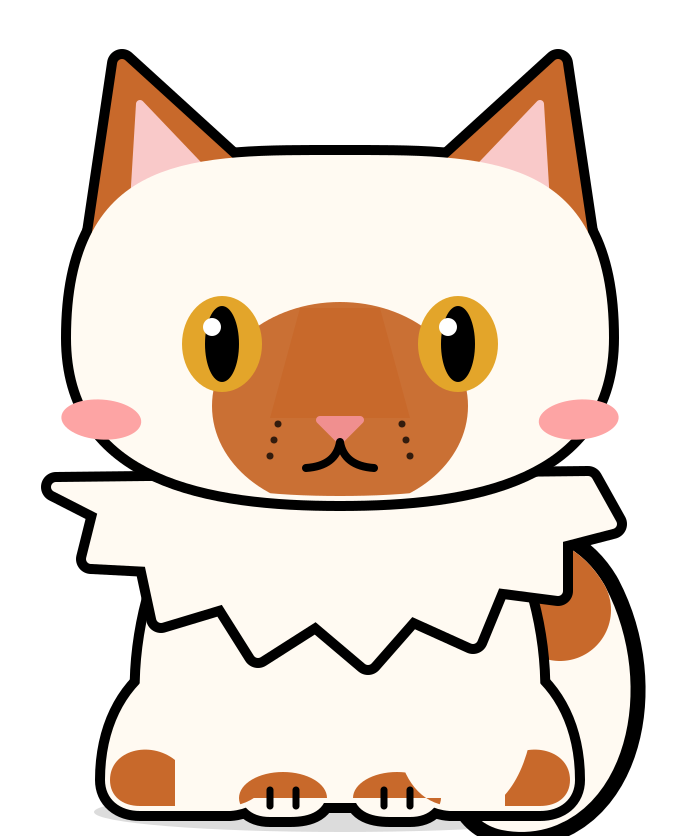
The Turkish Van is an ancient breed from the region around Lake Van in eastern Turkey. It is often called the “swimming cat”, because many Vans really do enjoy water, which is said to be how they coped with the region’s hot summers. The breed reached Britain in the 1950s.
The pattern that gives the breed its name is white all over, with colour only on the head and tail.


Turkish Van at a glance
- Origin
- Lake Van region, eastern Turkey
- Size
- Large
- Weight
- Females 4 to 6 kg, males 5 to 8 kg
- Lifespan
- Usually 12 to 17 years
- Coat
- Semi-long, silky, and water-resistant, with a single-layer feel
- Colours
- White with coloured markings on the head and tail (the “van” pattern), often auburn
Personality scorecard
- Energy
- 5 out of 5
- Affection
- 3 out of 5
- Chattiness
- 3 out of 5
- Grooming needed
- 2 out of 5
- Good with children
- 3 out of 5
- Good with other pets
- 3 out of 5
Our own rough guide. Every cat is different.
What they look like
A large, long-bodied, muscular cat with a broad chest, a wedge-shaped head and big ears. The signature “van” pattern is a chalk-white body with auburn or cream markings on the head, with a white blaze between the ears, and a ringed, auburn tail. Eyes are amber, blue or one of each. The semi-long coat feels like cashmere and does not mat easily.
Personality
Bold, energetic and clever. Vans love to climb, leap and run, and many love to play with running water, to the despair of anyone with a dripping tap. They bond closely with their favourite people and are not always happy to be picked up. They are strong, so they suit homes with older children.
Care and grooming
Plenty of space, high perches and daily play. Brush once or twice a week, more when they shed in summer. Because of their water-loving habits, make sure bathrooms, buckets and ponds are safe. Feed a good complete diet.
Health to know about
Generally healthy and long-lived. White cats with blue eyes can be born deaf, so ask breeders about hearing tests. Hypertrophic cardiomyopathy (HCM) has been reported, so ask about heart screening in the parents.
Could suit
- Active homes with space to climb
- Owners who like a playful, intelligent cat
- Households with older children
Think twice if
- If you want a calm lap cat
- If you have a small flat
- If you do not want paw prints in the bath
“Water? I have been looking forward to this all day. Please do not tell the other cats.”
Name ideas for a Turkish Van
- Van
- Ember
- Splash
- Saffron
- Anatolia
- Lotus
- Paprika
- Mango
- Nimbus
- Marble
Want more? Try the cat name generator, or find out their age in human years with the cat age calculator.


Questions people ask
Do Turkish Vans really like water?
Many do. They are known as the “swimming cat”, and plenty will paddle, play in a sink or watch a running tap, though not every cat enjoys it.
What is the van pattern?
A mostly white cat with colour only on the head and tail. The colour is often auburn, but can be cream, black, blue or tortoiseshell.
Are Turkish Vans deaf?
White cats, especially those with blue eyes, can be born deaf. A hearing test is a good idea for any kitten you are considering.
Are Turkish Vans good with children?
They can be, especially older children who are happy to play. They are strong and active, so supervise young children.
Other breeds to meet
This is a friendly overview, not veterinary advice. Ask your vet about your own cat.
