


British Longhair
All the teddy-bear charm, with a fluffier coat


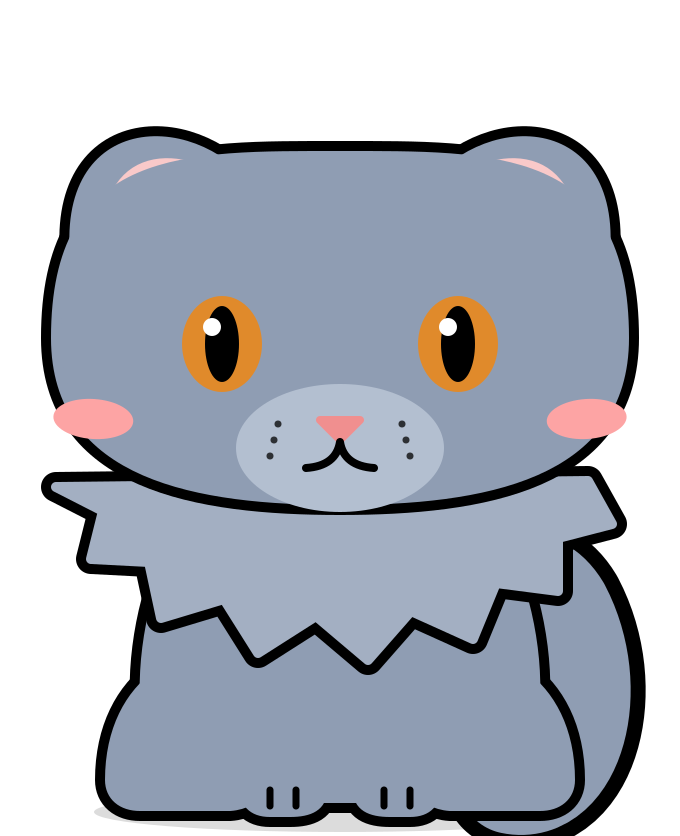
The British Longhair is a British Shorthair with a longer coat. The long-haired gene crept into the British lines when other long-haired breeds were used to rebuild the Shorthair after the Second World War, and it has stayed in the gene pool ever since. The cat underneath is the same big, round, easy-going teddy bear.
Some registries call it the Britannica or treat it as a separate breed, and others simply list it as a coat variety, so the name you see depends on where you look.


British Longhair at a glance
- Origin
- Britain
- Size
- Medium to large
- Weight
- Females 3.5 to 5.5 kg, males 5 to 8 kg
- Lifespan
- Usually 12 to 17 years
- Coat
- Semi-long, dense and plush, with a full ruff and a fluffy tail
- Colours
- Blue-grey is famous, but they come in many colours and patterns
Personality scorecard
- Energy
- 2 out of 5
- Affection
- 3 out of 5
- Chattiness
- 2 out of 5
- Grooming needed
- 3 out of 5
- Good with children
- 4 out of 5
- Good with other pets
- 4 out of 5
Our own rough guide. Every cat is different.
What they look like
Like the Shorthair, a British Longhair is stocky and broad, with a big round head, full cheeks, round eyes and small ears set wide apart. The coat is the difference: medium-long, dense and soft, with a ruff around the neck, feathering on the legs and a plume of a tail. It sits close to the body rather than flowing like a Persian’s.
Personality
Calm, affectionate and not at all demanding. British Longhairs tend to like being near you more than on you, and many are not keen on being carried. They are usually relaxed with children and other pets, and cope well with a quiet day on their own.
Care and grooming
Brush two or three times a week, and daily when they moult in spring and autumn, paying attention to the belly, armpits and “trousers” where the longer fur tangles. As with the Shorthair, weight is the main job: measured meals and daily play with a wand toy stop a cuddly cat becoming an overweight one.
Health to know about
Obesity is the big one. Hypertrophic cardiomyopathy (HCM), a thickening of the heart muscle, is seen in British cats, so ask any breeder about heart screening in the parents. The longer coat also means hairballs and mats are more likely than in a shorthair.
Could suit
- Calm homes and flats
- Families with gentle children
- People who want a laid-back companion and do not mind brushing
Think twice if
- If you want a cat who loves being carried
- If you cannot brush a few times a week
- If you want an energetic climber
“Same cuddly face, extra fluff. Very good at looking dramatic in a sunbeam.”
Compare the British Longhair
Name ideas for a British Longhair
- Fluffernutter
- Duchess
- Biscuit
- Winnie
- Cloud
- Pudding
- Bertie
- Smudge
- Willow
- Marmite
Want more? Try the cat name generator, or find out their age in human years with the cat age calculator.


Questions people ask
What is the difference between a British Shorthair and a British Longhair?
The coat. A British Longhair has medium-long, plush fur with a ruff and a feathered tail, while a Shorthair’s coat is short and dense. In build and personality they are very alike.
Do British Longhairs need a lot of grooming?
More than a Shorthair. Plan on brushing two or three times a week, and daily during the spring and autumn moult.
Are British Longhairs good family cats?
They often are. They tend to be calm and tolerant, though many dislike being picked up, so children should be taught to let the cat come to them.
How long do British Longhairs live?
Usually 12 to 17 years, with good care, a healthy weight and regular vet check-ups.
Other breeds to meet
This is a friendly overview, not veterinary advice. Ask your vet about your own cat.
