Cat guide ·
Kitten Growth Stages Explained: From Newborn to Grown-Up Cat
By the Brus Crew, a family with a house full of cats
Kittens change faster than almost anything else you'll ever share a home with. In a few short weeks they go from blind, deaf little bundles to wobbly explorers, and by their first birthday they're adult cats. This guide walks through the kitten growth stages week by week and month by month: what's happening at each point, and what you can do to help.
Kitten growth stages at a glance
| Age | What's happening | What you can do |
|---|---|---|
| 0–2 weeks (newborn) | Eyes and ears closed. Kittens feed, sleep and rely on mum for warmth. Eyes open at around 1–2 weeks. | Keep the nest warm, quiet and undisturbed. Check every kitten is feeding and gaining weight. |
| 2–4 weeks (transitional) | Ears open, first wobbly steps, baby teeth start to come through. | Short, gentle handling. Make the area around the nest safe for crawlers. |
| Roughly 2–7 weeks (socialisation) | The key window for learning that people, sounds and handling are nothing to fear. | Gentle handling by different people, everyday household sounds, lots of play. |
| Around 4–8 weeks (weaning) | Moving from mum's milk to kitten food, and learning to use a litter tray. | Offer soft kitten food little and often, fresh water and a low-sided litter tray. |
| 8–12 weeks | Ready for a new home from around 9 weeks. First vaccinations are commonly from about 8–9 weeks. | Book a vet check, follow your vet's vaccination schedule, kitten-proof your home. |
| 3–6 months | Adult teeth start replacing baby teeth. Huge energy and curiosity. | Safe chew toys, plenty of play, and a chat with your vet about neutering. |
| 6–12 months (adolescence) | Growth slows. Boundary-testing and sudden bursts of energy. | Keep up play and routine. Ask your vet when to switch to adult food. |
| 12 months and over | Most cats are adults. Some larger breeds keep maturing for longer. | Regular vet checks and boosters. Adult food when your vet agrees. |
Newborn kittens (0–2 weeks)
Kittens are born with their eyes and ears sealed shut. They can't see, can barely hear and can't keep themselves warm, so for the first couple of weeks life is all about mum: feeding, sleeping and staying snug in a pile with their littermates. They can't even go to the toilet on their own yet. Mum licks them to get things moving.
The eyes usually open at around 1–2 weeks, a little at a time. Every kitten starts out with blue eyes, and the adult colour often comes through gradually over the following weeks. The ears start to open around now too.
What you can do: give mum a warm, quiet, draught-free spot and leave the family in peace as much as possible. If you find yourself caring for orphaned kittens, speak to a vet straight away. Newborns need special kitten milk (never cow's milk) and round-the-clock care.
Transitional stage (2–4 weeks)
This is when kittens start to switch on to the world. They begin to respond to sounds, and somewhere around three weeks they swap the belly-crawl for a wobbly, very determined walk. The first play starts too: batting, tumbling and clambering on mum.
Baby teeth start to come through now, beginning with the tiny front teeth. Kittens have 26 baby teeth, and every one is swapped for an adult tooth later on (our kitten teething guide covers that).
What you can do: short, gentle handling sessions are fine, as long as mum is relaxed about it. Check the nest area for gaps and drops, because small explorers will find them.
The socialisation window (roughly 2–7 weeks)
If one stage shapes the cat your kitten becomes, it's this one. Between roughly 2 and 7 weeks, kittens are learning what's normal and safe. Kittens who are gently handled by different people and get used to everyday sights and sounds during this window are far more likely to grow into confident, friendly adults. Kittens who miss out can stay wary of people and new things for life.
Good experiences to build in:
- Gentle handling every day by a few different people, including touching paws, ears and mouth. This pays off later at vet visits and claw trims.
- Normal household sounds: the washing machine, the vacuum cleaner, the doorbell, the TV.
- Different surfaces to walk on, and a cat carrier left open with a soft blanket inside so it becomes just another den.
- Calm, supervised meetings with other friendly pets.
- Plenty of play. Our guide to safe cat toys will help you pick the right ones.
Keep everything short, calm and positive. You're aiming for "that was fine", not "that was a lot".
Weaning (around 4–8 weeks)
From about four weeks, kittens start taking an interest in mum's food. That's the cue to offer a good-quality kitten food in a shallow dish: wet food, or dry food softened with a little warm water. They'll walk in it and wear it before they eat it. By around 8 weeks most kittens are fully weaned.
Kittens need small meals often, because their stomachs are tiny and they're growing fast. Keep fresh water available at all times, and skip the saucer of milk: many cats can't digest cow's milk properly and it can upset their stomachs.
This is also when kittens learn to use a litter tray, usually by copying mum. A low-sided tray they can climb into easily is the best start.
Going to a new home (8–12 weeks)
Kittens learn an awful lot from mum and their littermates in those early weeks, including how hard is too hard when they bite during play. In the UK, cat welfare charities recommend that kittens don't leave their mum before 8 weeks, and ideally go to their new home at around 9 weeks or older.
If you're buying or adopting, ask to see the kitten with its mum, and walk away from anyone offering very young kittens or rushing you into a quick handover.
Start your new kitten off in one quiet room with food, water, a litter tray, a bed and somewhere to hide, then open up the rest of the house a bit at a time.
Vaccinations, microchipping and neutering
Your vet will set your kitten's schedule, so always follow their advice. As a general guide:
- Vaccinations: first vaccinations are commonly given from about 8–9 weeks, with a second dose a few weeks later. Your vet will tell you when it's safe for your kitten to go outside.
- Microchipping: in England, cats must be microchipped by the time they're 20 weeks old.
- Neutering: often recommended from around 4 months. Female kittens can get pregnant surprisingly young, so speak to your vet about the right time for yours.
- Fleas and worms: kittens need regular treatment that's suitable for their age and weight. Ask your vet which products to use.
Kitten growth chart: how much should a kitten weigh?
Every kitten grows at their own pace, and breed, sex and litter size all play a part. Treat these figures as rough guides only:
- At birth: roughly 100 g.
- First week or two: roughly double their birth weight.
- At 8 weeks: roughly 700 g to 1 kg.
- From 2 to 6 months: a common rule of thumb is roughly 400–500 g a month, slowing down after that.
What matters most is steady gain. For very young kittens, a quick weigh on digital kitchen scales every few days is an easy way to keep track. If a kitten stops gaining, loses weight or looks much smaller than their littermates, call your vet. Your vet can check they're on track at every visit.
3–6 months: new teeth and maximum energy
From roughly 3–4 months to about 6–7 months, adult teeth push out the baby ones, so expect a lot of chewing. This is also peak zoomies. Kittens at this age play hard, sleep hard and climb anything that stands still. Two or three good play sessions a day burn off energy and spare your curtains.
Adolescence (6–12 months)
Growth slows down, but the personality is still settling in. Adolescent cats can be bold, boundary-pushing and prone to sudden bursts of energy. Keep play sessions regular, stick to routines, and reward the behaviour you want rather than telling off the behaviour you don't. Unneutered cats are also reaching sexual maturity, another reason to talk to your vet about neutering early.
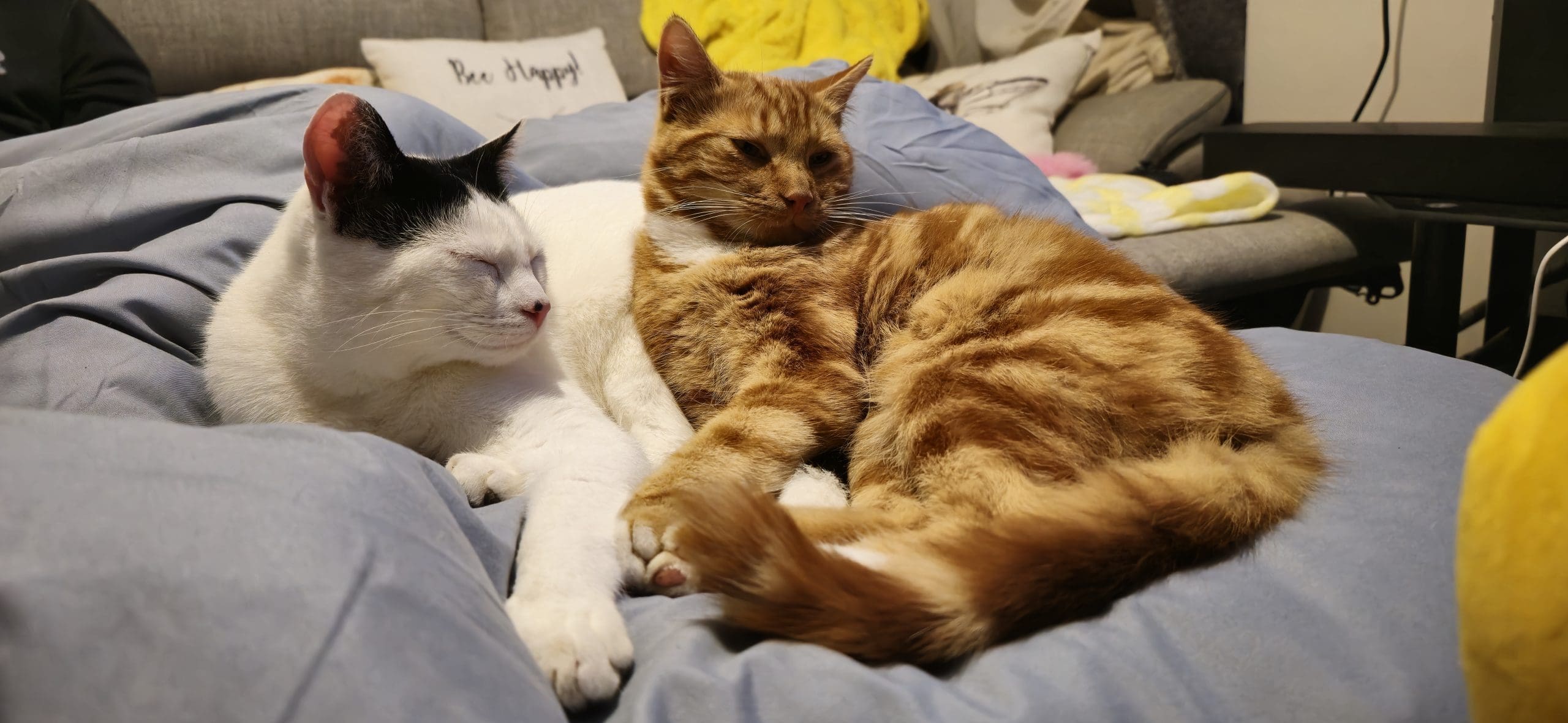
Our crew joined the site as young cats. Rocket and Mr Snuggles Jr were both 9 months old when their profiles were written, right in the middle of this stage.
When is a kitten fully grown?
Most cats are considered adults at around 12 months, which is usually when vets suggest moving from kitten food to adult food. Some larger breeds, such as the Maine Coon, mature more slowly and can keep filling out well beyond their first birthday. Your vet can tell you when to make the switch for your cat.
Questions people ask
When do kittens open their eyes?
Usually at around 1–2 weeks old. If a kitten's eyes look sticky or swollen, or still haven't opened after about two weeks, get them checked by a vet.
When can kittens leave their mum?
UK cat welfare charities recommend not before 8 weeks, and ideally at around 9 weeks or older, once kittens are weaned and eating kitten food confidently.
How long is a cat considered a kitten?
Until around 12 months old. Some larger breeds take longer to reach their full adult size.
Got a kitten working their way through these stages? Send us their photo and they could be featured on the site.