Cat guide ·
When Is a Kitten Fully Grown? When Kittens Become Cats
By the Brus Crew, a family with a house full of cats

When does a kitten become a cat? Most cats are considered adults at around 12 months old and reach their full size somewhere between 12 and 18 months. Large, slow-maturing breeds such as Maine Coons and Ragdolls are the exception, and can keep growing and filling out until they're about 3–4 years old. Kittens grow up in other ways much sooner, though: they can reach sexual maturity as early as 4–6 months, long before they've finished growing. Here's how kittens grow month by month, the signs yours is nearly there, and when to make the switch to adult food.
Key points
- Most cats are adults at about 12 months and fully grown by 12–18 months.
- Large breeds like Maine Coons and Ragdolls can keep growing until they're about 3–4 years old.
- Kittens can reach sexual maturity at 4–6 months, so neutering matters long before they're fully grown.
- Most cats move on to adult food at around 12 months, but check the label and ask your vet.
- A one-year-old cat is about 15 in human years, and a two-year-old about 24.
What age are cats fully grown?
For most moggies (everyday mixed-breed cats), the biggest growth spurt happens in the first six months. After that, things slow down a lot. By their first birthday most cats are close to their adult height and length, and over the next few months they fill out, putting on muscle and broadening through the chest. Somewhere between 12 and 18 months, most cats reach their full adult size. Boys often end up a little bigger than girls.
Big, slow-maturing breeds work to a different timetable. Maine Coons and Ragdolls can keep growing and filling out until they're around 3–4 years old, so a two-year-old Maine Coon may still be very much a work in progress.
Kitten, junior or adult? The cat life stages
Vets and cat charities often split a cat's life into six stages, based on the system used by International Cat Care. Under this system, a cat only counts as a kitten until 6 months old, and then spends the time until their second birthday as a "junior", which is the feline version of the teenage years.
| Life stage | Cat's age | Roughly in human years |
|---|---|---|
| Kitten | Birth to 6 months | 0 to 10 |
| Junior | 7 months to 2 years | 12 to 24 |
| Prime | 3 to 6 years | 28 to 40 |
| Mature | 7 to 10 years | 44 to 56 |
| Senior | 11 to 14 years | 60 to 72 |
| Super senior | 15 years and over | 76 and over |
So while most people (and most pet food labels) treat 12 months as the moment a kitten becomes a cat, your one-year-old is technically still a junior. Our cat age calculator will tell you exactly where your cat sits.
How kittens grow, month by month
Every kitten grows at their own pace, but here's the rough shape of that first year and a half. For the week-by-week detail, see our guide to kitten growth stages.
- 0–2 months: From a newborn with closed eyes to a wobbly explorer. Eyes open at around 1–2 weeks, baby teeth arrive, and most kittens are weaned by about 8 weeks.
- 2–3 months: Fast growth and endless play. Kittens usually start their vaccinations and move to their new homes from around 9 weeks.
- 3–6 months: Adult teeth start pushing out the baby ones, so expect plenty of chewing (our kitten teething guide can help). Sexual maturity can arrive from about 4 months.
- 6–12 months: Growth slows down. Your kitten starts to look like a cat, if a slightly gangly one, and the teenage phase kicks in.
- 12–18 months: Most cats reach their full size and fill out with muscle.
- 18 months to 4 years: Only the big, slow-maturing breeds are still growing.
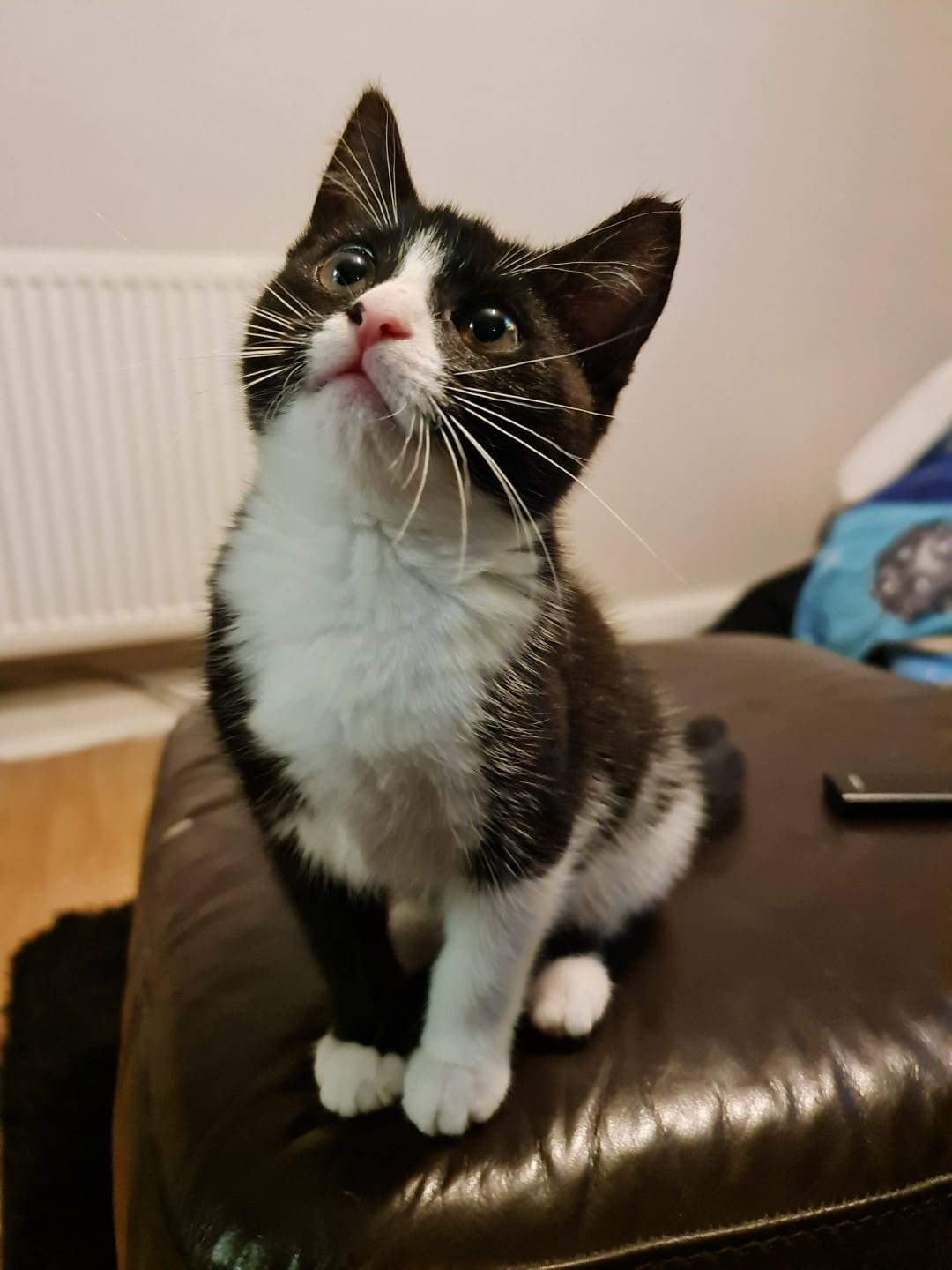
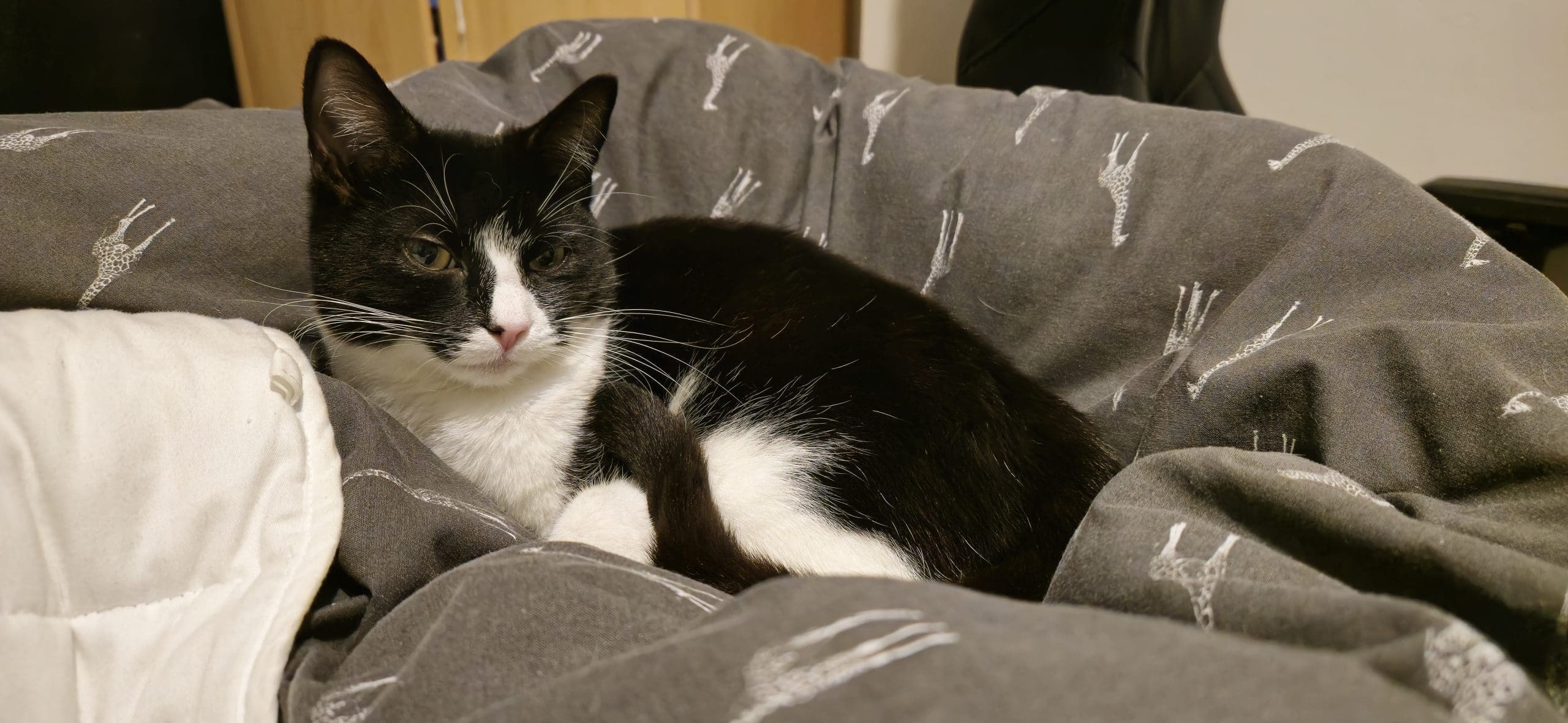
Zendaya: from tiny kitten to boss of the house
The photo at the top of this page is our very own Zendaya as a tiny kitten, perched on a leather footstool and looking up at the world. She was about a year old when her profile was written, and by then she'd well and truly grown into her role as the boss of the house. She keeps everything in check, patrols the house, lounges in the sun, plays with her toys and demands belly rubs. It's a lot of responsibility for someone who once fitted on a footstool.
Signs your kitten is nearly fully grown
There's no single moment when a kitten clocks off and a cat clocks on, but these are good clues that yours is getting there:
- Their growth slows right down. Weight gain levels off, and weigh-ins at the vet show smaller and smaller changes.
- All their adult teeth are in. By about 6–7 months most cats have their full set of 30 adult teeth. Teeth are one of the clues vets use to estimate a cat's age, as we explain in how to tell how old a cat is.
- They look in proportion. The gangly legs and slightly too-big ears of a teenage kitten even out as the rest of the body catches up.
- They're a little less frantic. Many cats calm down a bit as they head towards two, though plenty stay playful for life.
- Hormones kick in (if they're not neutered). Unneutered females come into season, calling loudly and rolling around, and unneutered males may start roaming and spraying. That's a sign of maturity rather than full size, and a sign neutering is overdue. Our help a cat today page has pointers on low-cost neutering schemes.
The teenage phase: what changes between 6 months and 2 years
If your sweet little kitten suddenly turns into a whirlwind somewhere around six months, welcome to the teenage phase. Junior cats are nearly full size, packed with energy and keen to test the rules. A one-year-old cat is roughly 15 in human years, which explains a lot, and a two-year-old is about 24.
Common teenage behaviour includes:
- bursts of energy and zoomies, often in the evening or early morning
- climbing everything, including curtains and bookshelves
- rough play, pouncing on feet and play-biting hands
- testing boundaries, like hopping onto worktops they've been lifted off a hundred times
- a growing interest in the great outdoors
Help them through it with two or three good play sessions a day using wand toys and chase toys, never your hands or feet, and reward the behaviour you want rather than telling them off for the behaviour you don't. Stick to routines, give them places to climb and scratch, and talk to your vet about neutering if you haven't already, because it reduces hormone-driven behaviour such as roaming, spraying and calling. This is also the age when many cats start exploring outside, so have a read of what age cats can go outside before you open the door.
When should a kitten switch to adult food?
Most cats move from kitten food to adult food at around 12 months. Kitten food is packed with extra energy and nutrients for growing, which a grown-up cat doesn't need. Check the label on your cat's food, as most brands say which ages it's made for, and ask your vet if you're not sure. Large, slow-maturing breeds may need to stay on kitten food for longer.
Make the change gradually over about a week, mixing a little of the new food in with the old and increasing it day by day, to avoid upset tummies. Neutering lowers a cat's energy needs, so keep an eye on their waistline and ask your vet to check their weight at their yearly check-up.
Zendaya isn't a picky eater. She likes a mix of wet and dry food with the occasional treat, and plenty of adult cats do well on a mix like that, as long as the total amount suits their size.
Questions people ask
At what age is a cat no longer a kitten?
Most people, vets and pet food brands treat 12 months as the point a kitten becomes an adult cat. Under International Cat Care's life stages, a cat is a kitten until 6 months and a junior until 2, so your one-year-old is a grown-up in some ways and a teenager in others.
Do cats still grow after a year?
Yes, a little. Most cats keep filling out and adding muscle until about 18 months. Big, slow-maturing breeds such as Maine Coons and Ragdolls can keep growing until they're about 3–4 years old.
How big will my kitten get?
It mostly depends on their breed, sex and genes, so seeing the parents, if you can, is the best clue. Steady growth matters more than size. Your vet can check your kitten is growing well and is a healthy weight at each visit.
Does neutering stop a kitten growing?
No. Neutering at around 4 months, as UK cat charities recommend, doesn't stunt a kitten's growth. Neutered cats do need fewer calories, though, so keep an eye on portion sizes as they settle into adulthood.
When do kittens calm down?
Many cats settle a little somewhere between one and two years old, once they're through the junior stage. Plenty stay playful for life, though, and regular play sessions are the best way to burn off that energy.
Watched your own kitten grow up far too fast? Show us your cat, baby photos and all, and they could be featured on the site.