Cat guide ·
Why Do Cats Purr? Happy, Hungry, Hurting and Everything In Between
By the Brus Crew, a family with a house full of cats

Why do cats purr? Mostly because they are content, but not always. Cats purr when they are relaxed and being stroked, when they want food or attention, and sometimes to comfort themselves when they are nervous, unwell or in pain. It is a flexible sound that cats use to talk to us and to look after themselves, so the situation matters as much as the noise.
Key points
- Most purring means a cat is relaxed and happy, especially when they are curled up or being petted.
- Cats also purr to ask for food or attention, and to soothe themselves when stressed or unwell.
- Kittens start purring within days of being born, which helps them stay close to their mum.
- A purr with other signs of illness, like hiding, not eating or heavy breathing, is worth a call to your vet.
The happy purr
The one we all love. A soft, steady purr from a cat who is stretched out on a warm lap or a sunny windowsill usually means they feel safe and comfortable. It often comes with slow blinks, a relaxed body and sometimes kneading (see our guide to why cats knead).
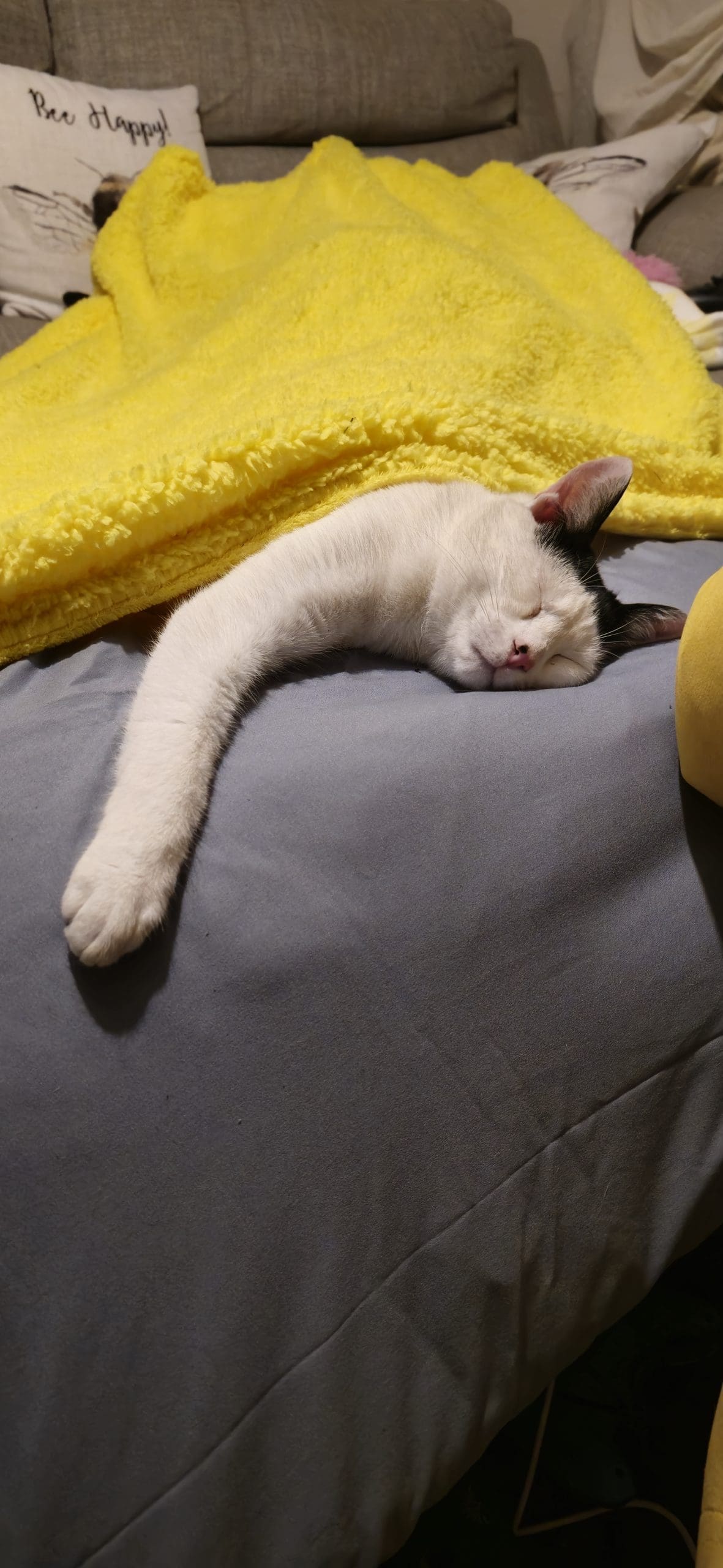
Our crew's own professional napper, Rocket, is a good example: tucked up under a blanket, he will purr at the slightest scratch under the chin.
The "feed me" purr
Some cats purr with a higher, more urgent edge when they want breakfast. Researchers have described a "solicitation purr" that blends a normal purr with a cry, and many people find it hard to ignore, which is the point. If your cat purrs loudest near the food cupboard, you have probably met this one. Our guide to what to feed a cat covers what a healthy diet looks like.
The comfort purr
Cats can purr when they are frightened, stressed, in pain or even close to the end of life. It is thought to be a way of calming themselves down, a bit like a person humming when they are nervous. That is why a purr on its own should never be read as proof that a cat is fine. Look at the whole cat: their posture, appetite, behaviour and whether anything has changed.
How do cats purr?
The exact mechanism is still being studied, but the usual explanation is that the brain sends rapid signals to the muscles of the voice box, which twitch and make the vocal cords vibrate as the cat breathes in and out. That is why a purr is continuous rather than coming in separate puffs. Typical purrs are low, in the region of 25 to 150 vibrations a second, which is a very low hum.
Why do kittens purr?
Kittens can purr when they are only a few days old. They are born blind and deaf, so a purr lets mum know where they are and that they are feeding, and mum's purr tells them she is close. You can read more about those early weeks in our kitten growth stages guide.
Do all cats purr?
Domestic cats do, although some are much quieter than others. Some cats purr so softly you can only feel it, and a few seem to purr very rarely. Larger wild cats, such as lions and tigers, roar and do not purr in the same way. Pet cats are different from each other, so get to know what your own cat's purr normally sounds like.
When to ask your vet
Call your vet if a purr comes with changes like:
- not eating or drinking, or losing weight;
- hiding away, or being unusually clingy;
- laboured or fast breathing;
- limping, crying out when touched or vomiting.
A vet can check what is going on. Our senior cat health guide also lists the signs to watch for as cats get older.
Other cat sounds
Purring is just one part of the cat vocabulary. Our cat sounds infographic shows what a meow, chirp, chatter, hiss and yowl usually mean.
Questions people ask
Does purring always mean a cat is happy?
No. Happiness is the most common reason, but cats also purr to ask for food or to calm themselves when they are stressed or hurt. Read the whole situation, not just the sound.
Why does my cat purr when I stroke them?
Because it feels good and they feel safe with you. Many cats also knead, blink slowly or press into your hand at the same time.
Why does my cat purr and bite?
Some cats get overstimulated while being petted and give a love bite or a warning nip. Watch for a twitching tail or flattened ears and stop before they do. Our guide to cat love bites explains this more.
Can purring heal cats?
You may have read that purring helps cats heal. It is an interesting idea, but the evidence is limited, so treat it as a theory, not a reason to put off a vet visit.
Why is my cat not purring any more?
A change can be quite normal, but if it comes with other differences in eating, energy or behaviour, ask your vet.